


Introduction
If you’ve ever wondered how many weekends in a year, you’re not alone. It’s one of those simple questions that can lead to interesting discoveries about how we spend our time. Whether you’re planning vacations, organizing your work schedule, managing personal goals, or simply looking forward to your next day off, knowing how many weekends a year contains can be surprisingly useful. How Many Weekends in a Year
At first glance, the answer seems obvious. Most people assume there are exactly 52 weekends every year because there are 52 weeks. While that’s generally correct, the complete answer is a little more detailed. Depending on the type of year and how the calendar falls, you may actually experience a few extra weekend days that slightly change the total.
How Many Weekends in a Year, we’ll break everything down in an easy-to-understand way. We’ll explain how weekends are counted, how leap years affect the calendar, and why understanding the number of weekends can help with better planning throughout the year.
The Simple Answer: How Many Weekends Are in a Year?
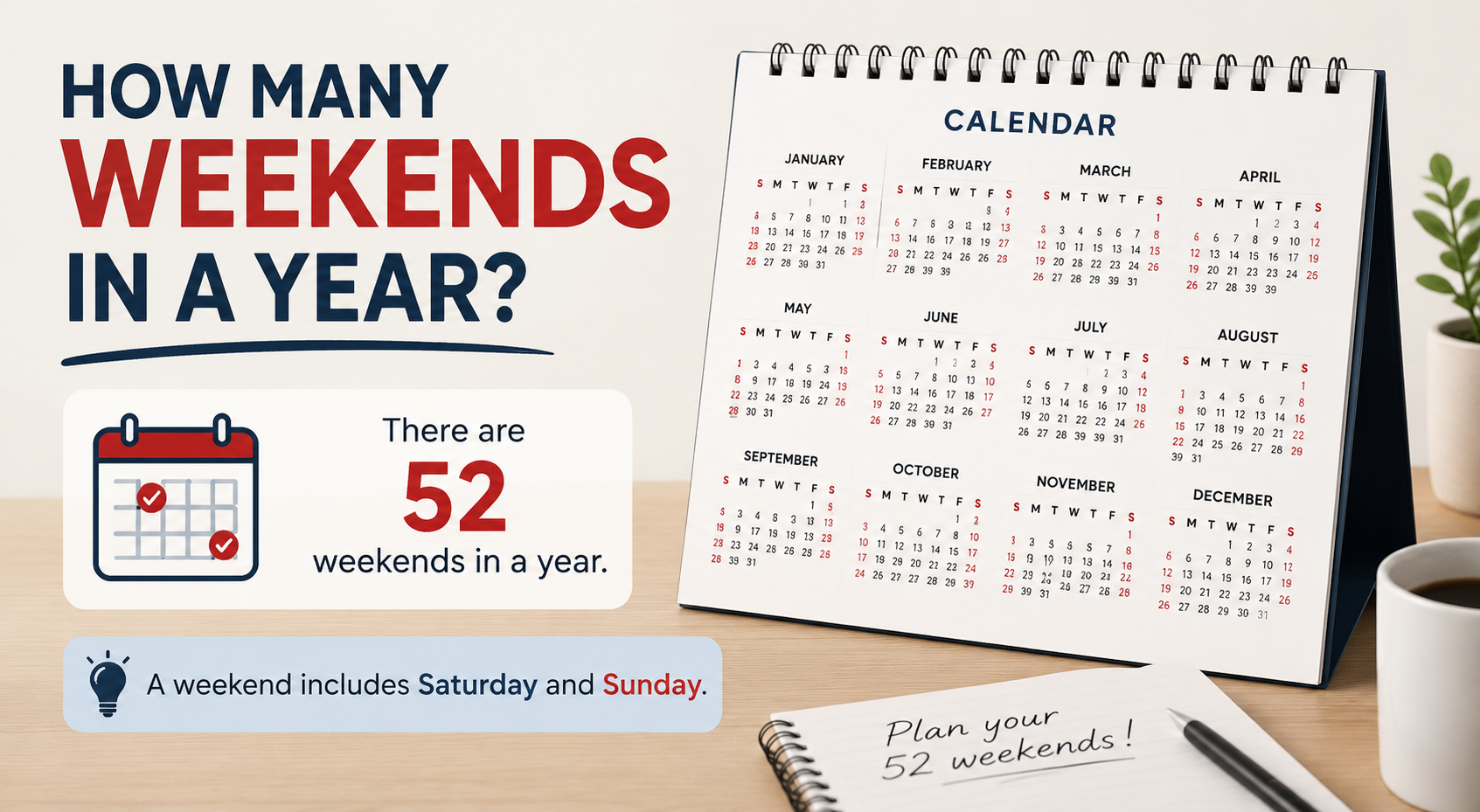
The short answer is that a typical year has 52 weekends. Since a standard year consists of 365 days, it contains 52 complete weeks plus one extra day. Every complete week includes one Saturday and one Sunday, giving us 52 Saturdays and 52 Sundays.
That means most years include 104 weekend days altogether. These two days each week are commonly recognized as the weekend in many countries, making them the most anticipated part of the week for students, employees, and families alike.
However, the remaining extra day at the end of the year doesn’t disappear. Depending on which day of the week January 1 falls on, that extra day may be a Saturday or Sunday. When that happens, the calendar can include an additional weekend day, making the yearly count slightly different. How Many Weekends in a Year
How the Calendar Determines the Number of Weekends
To understand why the number of weekends can vary, it’s helpful to know how the calendar is organized. A regular year has 365 days, while each week has exactly seven days. Dividing 365 by 7 gives you 52 weeks with one day left over.
That leftover day shifts the calendar every year. For example, if the extra day lands on a Saturday, you’ll have 53 Saturdays and 52 Sundays. If it lands on a Sunday, you’ll have 52 Saturdays and 53 Sundays. In either case, you’ll still have 104 or 105 weekend days, depending on how the dates fall. How Many Weekends in a Year
The same principle applies to leap years, which contain 366 days. Since there are two leftover days after the 52 full weeks, leap years have a greater chance of including an additional Saturday, Sunday, or both. This is why calendar layouts change slightly from year to year.
How Many Weekend Days Are in a Leap Year?
A leap year occurs every four years, adding one extra day to the month of February. Instead of 365 days, a leap year contains 366 days. This adjustment keeps our calendar aligned with Earth’s orbit around the Sun. How Many Weekends in a Year
Because a leap year has two extra days after the 52 complete weeks, the number of Saturdays and Sundays can vary more than in a regular year. Depending on which weekday January 1 falls on, there may be 53 Saturdays, 53 Sundays, or one of each.
In most cases, leap years still have around 104 to 106 weekend days. While this difference is small, it can affect scheduling, payroll calculations, school calendars, and annual planning for businesses that rely heavily on weekends. How Many Weekends in a Year
Why Knowing the Number of Weekends Matters
Many people don’t think about weekends until they’re planning holidays or counting vacation days. However, knowing how many weekends occur in a year can help with long-term planning in several areas of life. How Many Weekends in a Year
Employees often use weekends to balance work and personal responsibilities. Understanding how many weekends are available allows better planning for family events, travel, home improvement projects, or simply taking time to relax. Businesses also use weekend calculations when forecasting customer traffic, staffing needs, and seasonal promotions.
Students benefit as well. Weekends provide opportunities for studying, completing assignments, participating in extracurricular activities, or spending time with friends and family. Having a clear idea of the number of weekends in a school year can make time management much easier. How Many Weekends in a Year
How Weekends Affect Work-Life Balance
Weekends play a major role in maintaining a healthy work-life balance. After several busy weekdays, these two days offer valuable time to recharge physically and mentally. Many professionals rely on weekends to reduce stress and prepare for the upcoming week.
Research consistently shows that regular breaks improve productivity and overall well-being. Whether someone enjoys outdoor activities, spending time with loved ones, pursuing hobbies, or simply relaxing at home, weekends provide an essential opportunity to disconnect from work responsibilities. How Many Weekends in a Year
Planning your weekends intentionally can make an enormous difference over the course of a year. Since there are approximately 52 weekends annually, that’s more than one hundred days available for personal growth, recreation, and meaningful experiences outside of work. How Many Weekends in a Year
How to Make the Most of Your 52 Weekends
Although 52 weekends may seem like a lot, they often pass quickly. Without planning, many weekends disappear into errands, unfinished tasks, and endless scrolling through social media. Making intentional choices helps maximize these valuable days.
One effective strategy is to assign a simple purpose to each weekend. One weekend could be dedicated to travel, another to learning a new skill, another to spending quality time with family, and another to personal relaxation. This creates variety while ensuring your free time feels rewarding.
It’s also helpful to schedule important activities in advance. Booking short trips, attending local events, or setting aside time for fitness and hobbies gives you something to look forward to and helps prevent weekends from becoming repetitive.How Many Weekends in a Year
Frequently Asked Questions About Weekends in a Year
One common question is whether every year has exactly 52 weekends. Technically, every year contains 52 complete weekends, but the total number of weekend days may vary depending on how the calendar aligns with the days of the week. How Many Weekends in a Year
Another frequent question is how many Saturdays and Sundays occur each year. Most years include 52 Saturdays and 52 Sundays, although some years contain 53 Saturdays or 53 Sundays. Leap years increase the chances of having additional occurrences because of the extra calendar day. How Many Weekends in a Year
People also ask whether different countries have different weekends. While Saturday and Sunday are the standard weekend in many parts of the world, some countries observe Friday and Saturday or other combinations. Therefore, the number of “weekends” remains similar, but the specific days considered weekends may differ depending on local customs and labor laws. How Many Weekends in a Year
Fun Facts About Weekends
The concept of a two-day weekend hasn’t always existed. In many parts of history, people worked six or even seven days each week. Over time, labor reforms and changing workplace practices led to the modern five-day workweek that many people enjoy today.
If you total all the weekend days in a typical year, you’ll find there are around 104 days dedicated to Saturdays and Sundays. That’s nearly one-third of the entire year, highlighting just how significant weekends are in our lives.
Many people use weekends as an opportunity to pursue hobbies, volunteer in their communities, exercise, travel, or simply catch up on rest. These recurring breaks contribute greatly to mental health, stronger relationships, and overall happiness throughout the year.
Conclusion
So, how many weekends in a year are there? The simple answer is 52 weekends, which equals 104 weekend days in most years. Depending on how the calendar falls and whether it’s a leap year, you may experience an additional Saturday, Sunday, or both, slightly increasing the total number of weekend days.
Understanding how weekends are calculated isn’t just an interesting piece of calendar trivia. It can help you organize vacations, improve your work-life balance, schedule important events, and make better use of your free time throughout the year.
Instead of letting weekends pass by unnoticed, think of them as valuable opportunities. With around 52 chances every year to relax, learn something new, spend time with loved ones, or pursue your goals, each weekend becomes an investment in a happier and more balanced life.

